
Baltimore Community-Based Guaranteed Income Program Pilot: What We Made Together

What we did:
In order to support people who were recently unemployed, due to things like federal job cuts, we created a community-based guaranteed income program to provide what is essentially unemployment insurance. See this 2-pager with FAQ for more details on how it worked. I copied this idea from Comingle, which is an organization trying to do this through software at scale.
We had 20 people contribute 7% of their monthly post-tax income to a pool, and then distributed the average to all participants.1 The average monthly income was $3,424. We had 3 unemployed participants. Because other individuals donated extra, the distributed amount was $234. In total, we gave $1,625 to members in our community.
Our network represents a yearly salary of around $1 million, and increases everyones’ social capital. The highest monthly salary was ~$8,500. The median salary was $3,204. The standard deviation was $2,525. Sign up link if you’re interested in joining!
Edit: We’ve been running for over a year now! Follow us on Instagram & read about how it’s gone here!
How did it go?
Comments by participants:
“I feel closer to my community and hope this is something that continues.”
“Really really love this, especially in 2025 - gives me a small lifeline and helps me feel less alone”
“Looking forward to participating again if this continues, and hopefully providing support as my income increases over time.”
“I love the idea!! I feel it’s a great way to support the community!!”
“as a sworker and an asylee, this was the easiest and fastest non government tracked way of having money. feels safer than anything i've ever experienced here”
What did they spend their money on?
“rent!:) this money is really life changing”
“Groceries, electric bill”
“Groceries. I am unemployed right now so this money is really great to help cover the basics.”
“Supplement groceries and rent”
“Bills!”
“Groceries and some bills! So helpful.”
“My dog's anxiety medication, groceries at Aldi, gas, healthcare bill”
“I put it directly toward my bills”
“Nothing, any money I receive I plan to save”
We surveyed participants on easy the process was:
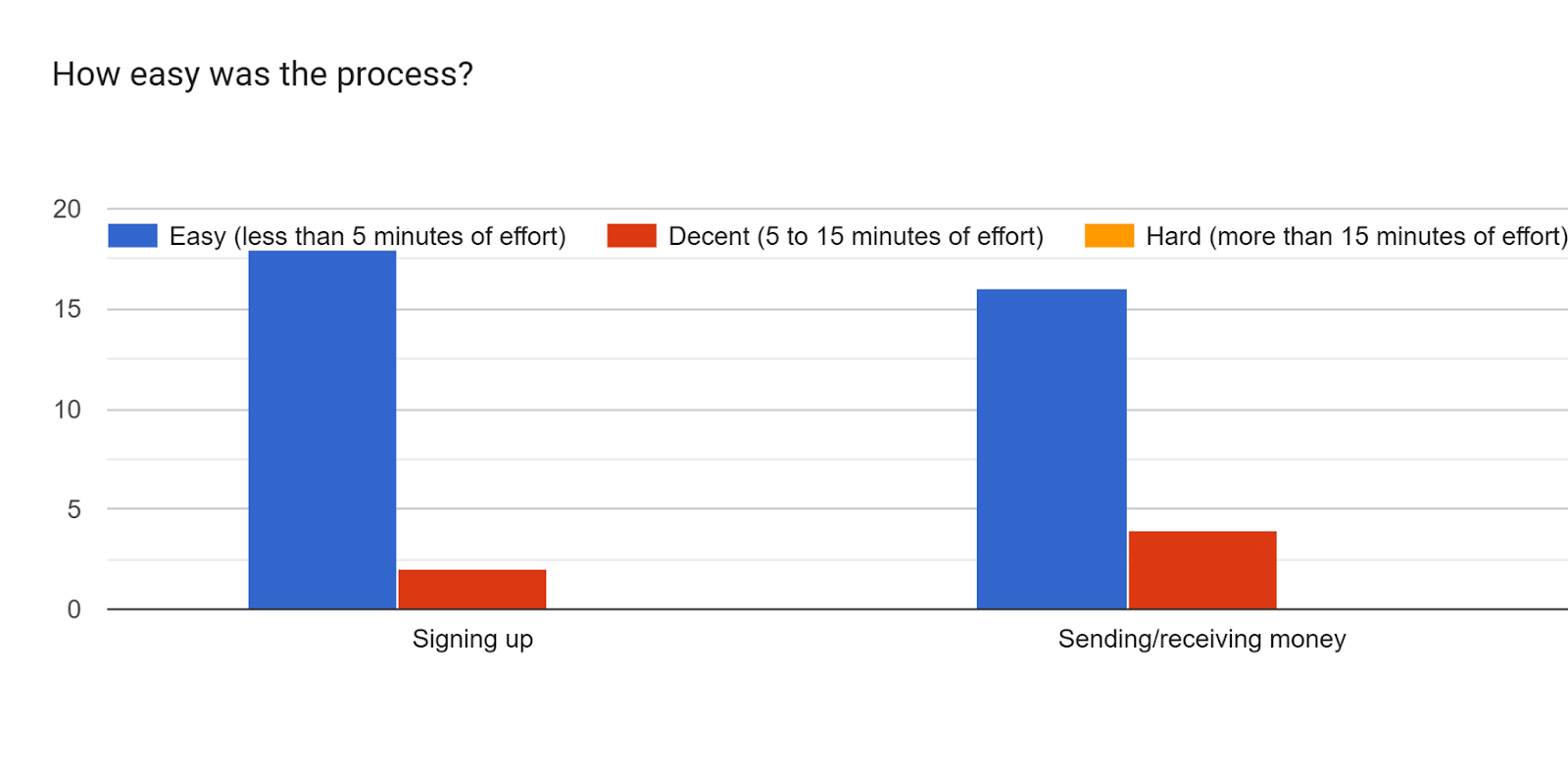
18 said signing up took less than 5 minutes, 2 said it took between 5 and 15 minutes
16 said sending / receiving money took less than 5 minutes, and 4 said it took between 5 and 15 minutes.
No participants said either process took longer than 15 minutes.
The overall sentiment after participating in the pilot was good!
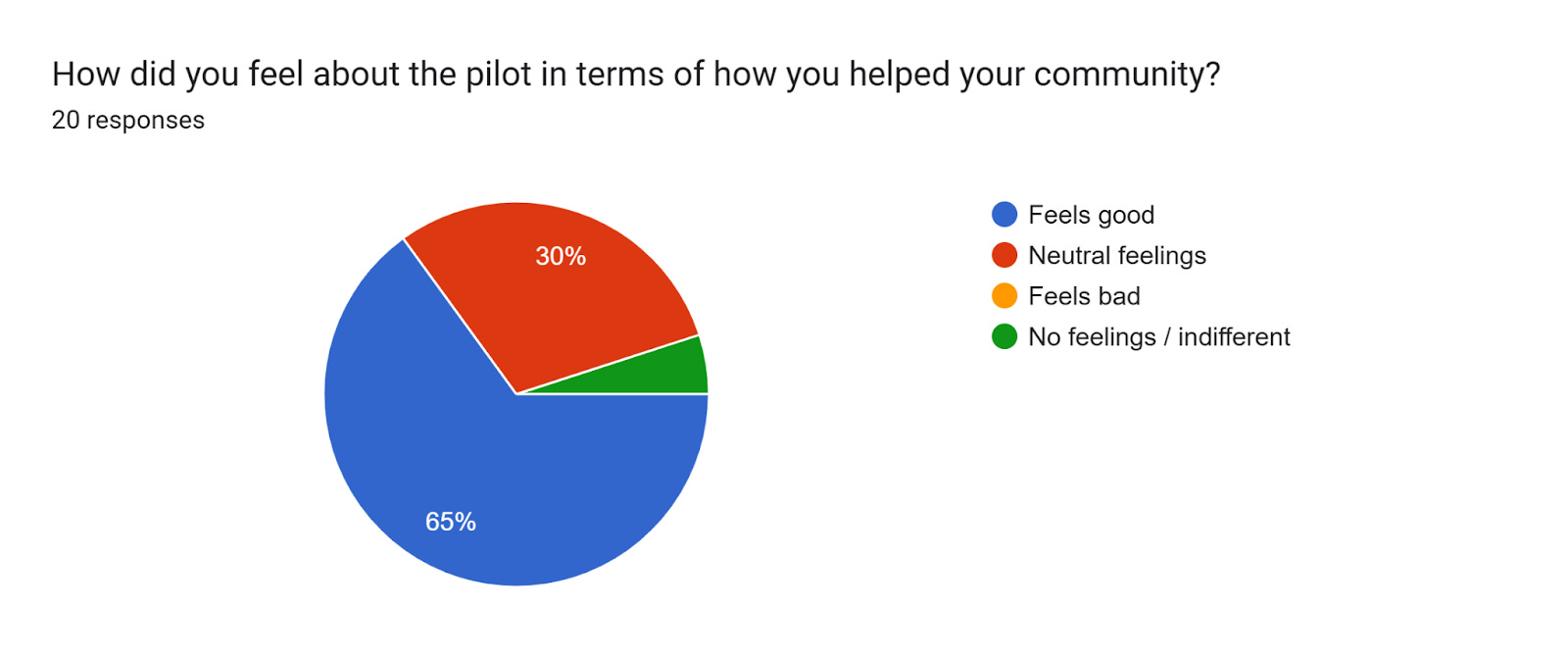
13 participants felt good, 6 felt neutral, and 1 felt no feelings / indifferent.
When asked how risky the whole process felt, there were mixed responses:
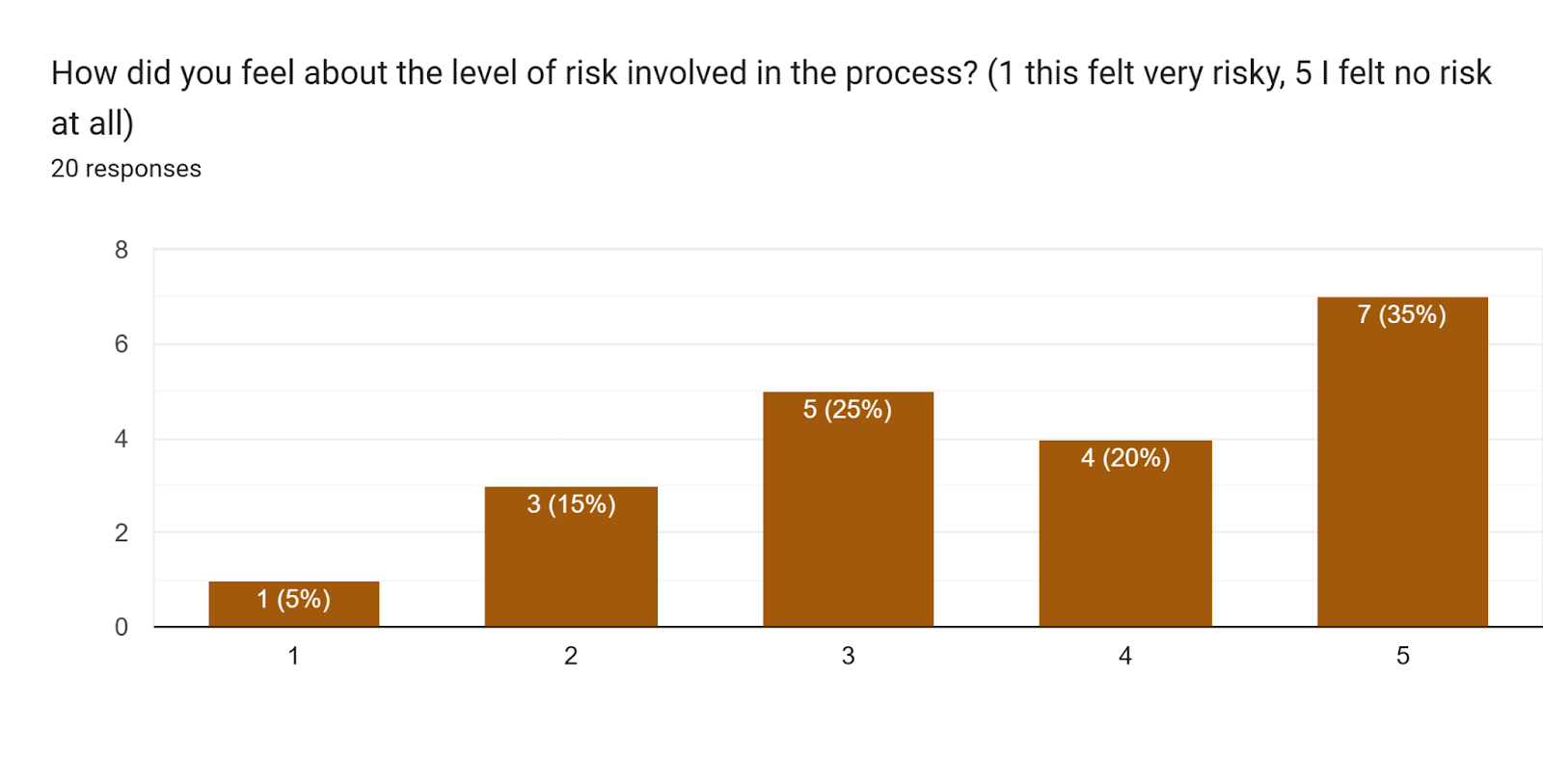
When asked to elaborate on the risk scores, the comments varied in terms of financial risks (being able to participate in the program short and long-term), administrative risks (making sure money reached the right person), privacy risks (sensitive information being too available), and ethical concerns (receiving financial support while uncertain about being able to give back in the future).
Moving forward, we’re going to try to improve the process based on feedback & try to keep this going!
How much work was it to make this happen?
& can I do this too? (Yes you can!)
I already had a large network of people who are community-oriented, altruistic, and would be interested in this idea, which helped a lot.
Set up: Making the initial sign-up form took about 15 minutes. You can copy it here.
Talking with many people & texting many people about it probably took 3-4 hours cumulatively.
Creating the Airtable and doing the calculations took about 45 minutes, though this could be automated at a larger scale. A friend is working on this now & I hope to share an Airtable skeleton & code here later!
Survey: Making the follow-up survey took about 10 minutes, and sending it to participants and following up took 15 minutes. You can copy that one here!
This write-up took about 60 minutes.
Sign up link if you’re interested in joining!

The money was not actually pooled, we calculated the pooled average and then had people distribute money through Venmo based on their calculated difference from the average. E.g. if you made $6000 a month, you might send $200 to a person who is unemployed. Another person who makes $4000 a month might send $50 to someone who makes $2000 a month, depending on the average.
Incredible work, Alex!